


Blog
Company news, lighting design ideas and advice on the lighting layout planning and selection of lighting equipment in our Blog and social networks:

How to Choose LED lights for your home
The choice of light in the house is a serious matter. After all, home lighting is not only, rather, not so much about style and beauty (although about it too), but about health and psychological comfort. And also about saving money and caring for the environment. High-quality LED lamps are exactly like this: their light does not harm health, they serve for a long time and regularly, and even please the eye with their appearance.
We are sure that everyone is looking for high-quality lamps, but what does this mean? How to choose a quality LED lamp? What should you pay attention to in order to buy the right and durable light for your home? There are many options, let's look at the main ones:
CRI. Or color rendering index. The higher it is at the lamp, the better. You can read more about this option on our blog. The color rendering index determines how natural you will see the colors of objects in the interior. For the maximum, the standard - 100 - daylight is taken, in which colors and shades look the way they should look: neither paler, nor grayer, nor yellower, but as they should.
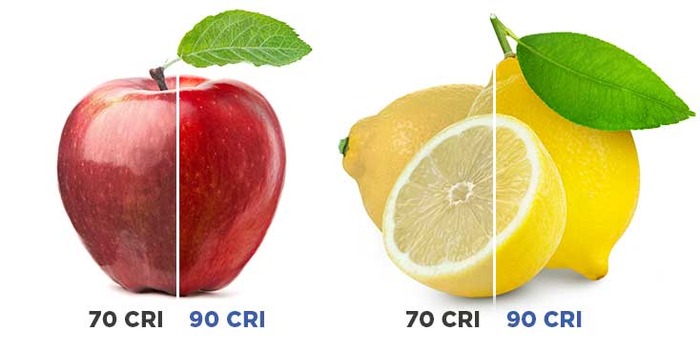
Low-quality lamps have a CRI of less than 80 (low), which distorts colors, does not show shades, and such light is visually unpleasant and annoying. Therefore, when choosing a luminaire, pay attention that the CRI is greater than 80.
Another question is that information about this parameter is often distorted - they write on the package CRI more than 80, and when checked with a special device, it does not reach 60-70. Therefore, ask the seller for quality certificates. Companies and manufacturing factories whose lamps do have a high CRI undergo rigorous tests and can prove the veracity of what is written on the packaging with the appropriate certificates.
Color temperature. We wrote about it in detail in our blog. For the main lighting in the house, choose lamps with a color temperature of 2700-3000 K (kelvins). Information about the color temperature, as a rule, is indicated in the product card on the website and on the packaging. Light with a color temperature of 2700-3000 K - a pleasant warm yellowish tint, such light relaxes, creates a feeling of coziness and comfort.
If the goal is not to relax, but to cheer up - for example, in the office, then it is better to choose a 4000K lamp. This color temperature is close to daylight invigorating light. Also, accent light with this color temperature can be used in the cooking area in the kitchen (LED strip) or for reading (lamp or directional LED spot).
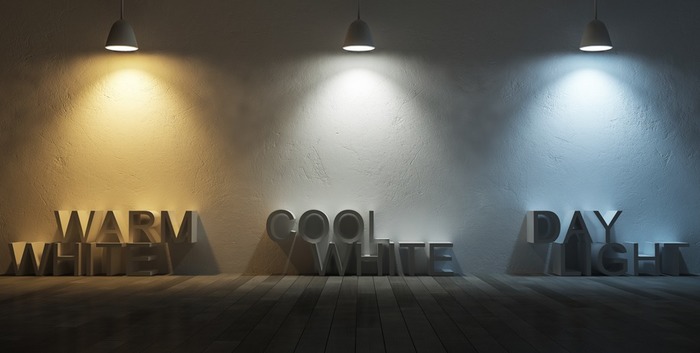
Important - on the packaging, the color temperature should not be indicated in the range, for example, 3000-4000K. Because there is no range, the lamp can be either 3000K or 4000K.
Brightness. Or light stream. It is measured in lumens, the more watts in the lamp, the more lumens and the brighter it shines. A standard 60 watt incandescent lamp can be replaced by an 8-10 W LED, their luminous flux will be similar - about 700 lumens. On the packaging of the lamp, the brightness should not be indicated in the range, only a specific number.
Ripple factor. Or the flickering effect is a faithful companion of low-quality fixtures. From the flickering light, vision deteriorates, the head hurts, insomnia appears, and the nervous system suffers. The flickering of light is especially dangerous for children, whose nervous and visual systems are still being formed.
Ripple coefficient should not exceed 5%, and it is better to be completely absent. Whether the lamp has flickering is easy to check on your own. To do this, turn on the mobile phone camera and point it at a working light source. If fast moving vertical black stripes appear on the phone screen, it means that the ripple factor is exceeded, the lamp is flickering and you should not buy it.
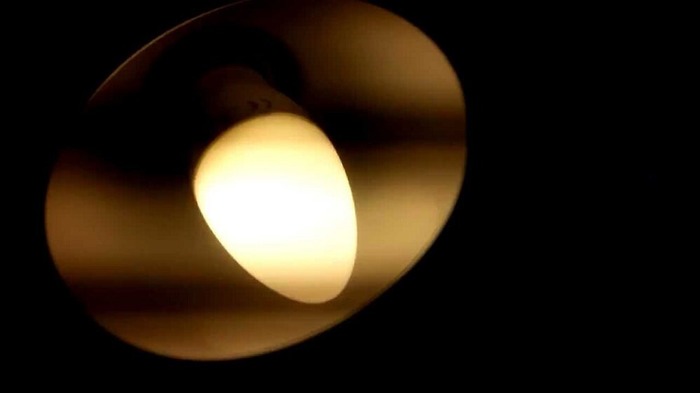
Light angle. Should not be too large, otherwise the lamp will blind. Luminaires with a beam angle from 10° to 40° are used for accent lighting of individual objects in the house and creating multi-level lighting. For the main lighting, fixtures with a beam angle from 45 ° to 90 ° are suitable. Luminaires with a beam angle of 90° or more - for large premises (office, production, etc.).
Warranty. Pay attention to what kind of warranty the manufacturer gives. LED lamps are positioned as durable, service life - from 35,000 to 50,000 hours, depending on operating conditions. Let's take the minimum threshold - 35,000 hours.
Let's say we have an LED lamp in the living room that runs every day for an hour in the morning and 4 hours in the evening - a total of 5 hours a day. We divide 35,000 hours by 5 and by 365 days a year - the lamp should work for 19 years. Of course, if the product has a low-quality LED, driver, or a poor heat sink, then it will fail much earlier. Therefore, the manufacturer's warranty is less than 2 years - a reason to think about the quality of the goods.
To choose lamps that will shine and delight for many years, pay attention to the parameters listed above.

There are other important points in LED lamps: the quality of the LED itself, the quality of the driver, the quality of heat dissipation from the LED, the aluminum case or plastic, if aluminum is cast or simply stamped ... many of these parameters are difficult to check without special equipment, therefore, again Also, ask about the availability of product conformity certificates.
And Lumita lamps are always ready to make your life easier - we strictly follow their impeccable parameters and characteristics.
We are sure that everyone is looking for high-quality lamps, but what does this mean? How to choose a quality LED lamp? What should you pay attention to in order to buy the right and durable light for your home? There are many options, let's look at the main ones:
CRI. Or color rendering index. The higher it is at the lamp, the better. You can read more about this option on our blog. The color rendering index determines how natural you will see the colors of objects in the interior. For the maximum, the standard - 100 - daylight is taken, in which colors and shades look the way they should look: neither paler, nor grayer, nor yellower, but as they should.
Low-quality lamps have a CRI of less than 80 (low), which distorts colors, does not show shades, and such light is visually unpleasant and annoying. Therefore, when choosing a luminaire, pay attention that the CRI is greater than 80.
Another question is that information about this parameter is often distorted - they write on the package CRI more than 80, and when checked with a special device, it does not reach 60-70. Therefore, ask the seller for quality certificates. Companies and manufacturing factories whose lamps do have a high CRI undergo rigorous tests and can prove the veracity of what is written on the packaging with the appropriate certificates.
Color temperature. We wrote about it in detail in our blog. For the main lighting in the house, choose lamps with a color temperature of 2700-3000 K (kelvins). Information about the color temperature, as a rule, is indicated in the product card on the website and on the packaging. Light with a color temperature of 2700-3000 K - a pleasant warm yellowish tint, such light relaxes, creates a feeling of coziness and comfort.
If the goal is not to relax, but to cheer up - for example, in the office, then it is better to choose a 4000K lamp. This color temperature is close to daylight invigorating light. Also, accent light with this color temperature can be used in the cooking area in the kitchen (LED strip) or for reading (lamp or directional LED spot).
Important - on the packaging, the color temperature should not be indicated in the range, for example, 3000-4000K. Because there is no range, the lamp can be either 3000K or 4000K.
Brightness. Or light stream. It is measured in lumens, the more watts in the lamp, the more lumens and the brighter it shines. A standard 60 watt incandescent lamp can be replaced by an 8-10 W LED, their luminous flux will be similar - about 700 lumens. On the packaging of the lamp, the brightness should not be indicated in the range, only a specific number.
Ripple factor. Or the flickering effect is a faithful companion of low-quality fixtures. From the flickering light, vision deteriorates, the head hurts, insomnia appears, and the nervous system suffers. The flickering of light is especially dangerous for children, whose nervous and visual systems are still being formed.
Ripple coefficient should not exceed 5%, and it is better to be completely absent. Whether the lamp has flickering is easy to check on your own. To do this, turn on the mobile phone camera and point it at a working light source. If fast moving vertical black stripes appear on the phone screen, it means that the ripple factor is exceeded, the lamp is flickering and you should not buy it.
Light angle. Should not be too large, otherwise the lamp will blind. Luminaires with a beam angle from 10° to 40° are used for accent lighting of individual objects in the house and creating multi-level lighting. For the main lighting, fixtures with a beam angle from 45 ° to 90 ° are suitable. Luminaires with a beam angle of 90° or more - for large premises (office, production, etc.).
Warranty. Pay attention to what kind of warranty the manufacturer gives. LED lamps are positioned as durable, service life - from 35,000 to 50,000 hours, depending on operating conditions. Let's take the minimum threshold - 35,000 hours.
Let's say we have an LED lamp in the living room that runs every day for an hour in the morning and 4 hours in the evening - a total of 5 hours a day. We divide 35,000 hours by 5 and by 365 days a year - the lamp should work for 19 years. Of course, if the product has a low-quality LED, driver, or a poor heat sink, then it will fail much earlier. Therefore, the manufacturer's warranty is less than 2 years - a reason to think about the quality of the goods.
To choose lamps that will shine and delight for many years, pay attention to the parameters listed above.
There are other important points in LED lamps: the quality of the LED itself, the quality of the driver, the quality of heat dissipation from the LED, the aluminum case or plastic, if aluminum is cast or simply stamped ... many of these parameters are difficult to check without special equipment, therefore, again Also, ask about the availability of product conformity certificates.
And Lumita lamps are always ready to make your life easier - we strictly follow their impeccable parameters and characteristics.
