


Blog
Company news, lighting design ideas and advice on the lighting layout planning and selection of lighting equipment in our Blog and social networks:

LED Lights Flickering
The pulsation of the light flux is the same as flickering, or the flickering effect. Another important concept - the ripple factor - is an indicator that is expressed as a percentage and shows the degree of fluctuation when the luminous flux changes. The main reason for the pulsation of light is its source, that is, alternating current.
This is how it happens when you walk through a shopping center or wait in line in some administrative building, and a lamp flickers disgustingly above you. After that, the head starts to hurt and feel sick - the classic result of being under a pulsating light source.
The pulsation of the light flux is an insidious lady, if its frequency is more than 300 Hz, then our brain and eyes do not perceive it. Studies have been conducted that prove that a pulsation with a frequency of more than 300 Hz does not harm health. If the pulsation frequency is below 300 Hz, then the “side effects” appear in all their glory. And this:
Easy eye fatigue and reduced visual acuity
Nausea and indigestion
Sleep disorders and circadian rhythms in general
Deterioration of attention
Fatigue of the whole body
Deterioration of brain activity

These are short-term manifestations that in the long term (if you are constantly under a pulsating light source, say, in an office or at home), can lead to serious consequences, such as:
Insomnia
Depression
Violation of the organs of vision
Disruption of the cardiovascular system
Gastrointestinal problems
Disorder of the nervous system
And even erectile dysfunction
To prevent all this, special sanitary standards have been created that limit the pulsation coefficient for various rooms. SP 52.13330.2011 "Natural and artificial lighting. Updated edition of SNiP 23-05-95" and SanPiN 2.2.1 / 2.1.1.1278-03 say that the coefficients of light pulsation with a frequency below 300 Hz should not exceed: > For living rooms - 20%
For schools and preschool institutions - 10%
For premises where high precision work is carried out - 10%
For work with computers - 5%
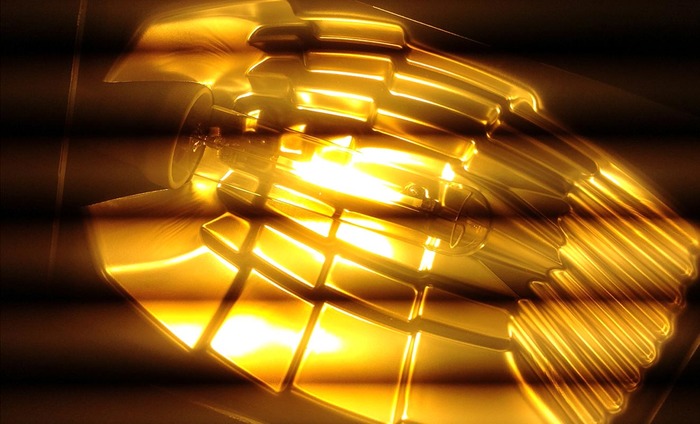
Dangerous, especially in industrial premises, is the stroboscopic effect. It occurs when the speed of rotation of fast moving mechanisms or machines coincides with the frequency of flickering light. This makes the mechanism appear to be stationary when it is not, which can result in injury or damage.
Everyone flickers!
Without exception, all the lamps flicker, but this is not always noticeable to our eyes. But the ripple coefficient, which has now become one of the main indicators of a high-quality lamp, differs for different types of lamps. So, for example, an incandescent lamp has a pulsation coefficient of 12-18%, for fluorescent lamps - 23-39%, for halogen lamps - 11-29%.
LED light sources look the most advantageous in this list, their pulsation coefficient is - 0-8%. This low ripple is achieved by using a driver that converts the mains AC to DC and controls the current flow through the LED circuit. If the LED lamp is connected correctly and the manufacturer put a high-quality driver into it, there will be no flickering problem either immediately or over time. If the manufacturer saved on the driver, then the ripple factor can reach up to 100%.
How to check for ripple?
Ideally - a special device. However, do not be upset if you do not have one lying around. The presence of pulsation in an LED lamp can also be checked in folk ways:
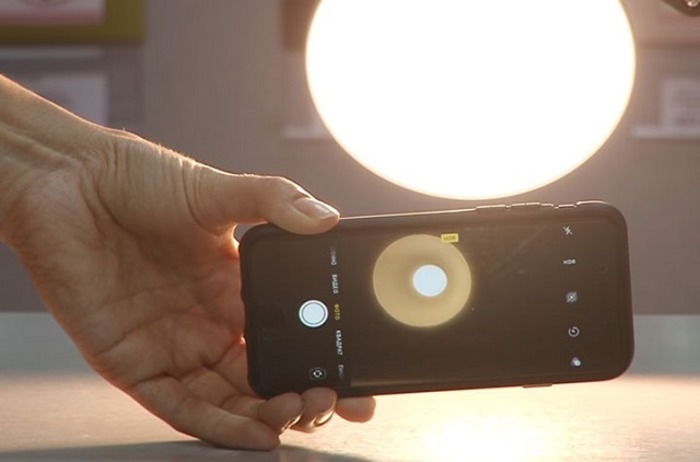
1. Mobile phone camera. Just turn it on and aim at the light source. If dark stripes run across the screen, look for better fixtures.
2. Pencil or ruler. Take a pencil or ruler in your hands and rotate it from side to side, simulating the movement of the fan blades. If the “vanes” are fixed in certain positions during movement, as if they are frozen in the air, then the pulsation coefficient exceeds the norm and it is better not to buy such a light source.
3. Yula. The probability that you have a top lying around at home is approximately equal to the probability of having a special heart rate monitor device in your house, but nonetheless. If, when starting a top or something similar, a stroboscopic effect is observed under the light source - that is, it seems that the top does not move - urgently change the light source.
The choice of light is a serious matter, since our health, mood and productivity directly depend on it. In Lumita luminaires, we use only proven high-tech drivers, which exclude the presence of pulsation as such.
This is how it happens when you walk through a shopping center or wait in line in some administrative building, and a lamp flickers disgustingly above you. After that, the head starts to hurt and feel sick - the classic result of being under a pulsating light source.
The pulsation of the light flux is an insidious lady, if its frequency is more than 300 Hz, then our brain and eyes do not perceive it. Studies have been conducted that prove that a pulsation with a frequency of more than 300 Hz does not harm health. If the pulsation frequency is below 300 Hz, then the “side effects” appear in all their glory. And this:
These are short-term manifestations that in the long term (if you are constantly under a pulsating light source, say, in an office or at home), can lead to serious consequences, such as:
To prevent all this, special sanitary standards have been created that limit the pulsation coefficient for various rooms. SP 52.13330.2011 "Natural and artificial lighting. Updated edition of SNiP 23-05-95" and SanPiN 2.2.1 / 2.1.1.1278-03 say that the coefficients of light pulsation with a frequency below 300 Hz should not exceed: > For living rooms - 20%
For schools and preschool institutions - 10%
For premises where high precision work is carried out - 10%
For work with computers - 5%
Dangerous, especially in industrial premises, is the stroboscopic effect. It occurs when the speed of rotation of fast moving mechanisms or machines coincides with the frequency of flickering light. This makes the mechanism appear to be stationary when it is not, which can result in injury or damage.
Everyone flickers!
Without exception, all the lamps flicker, but this is not always noticeable to our eyes. But the ripple coefficient, which has now become one of the main indicators of a high-quality lamp, differs for different types of lamps. So, for example, an incandescent lamp has a pulsation coefficient of 12-18%, for fluorescent lamps - 23-39%, for halogen lamps - 11-29%.
LED light sources look the most advantageous in this list, their pulsation coefficient is - 0-8%. This low ripple is achieved by using a driver that converts the mains AC to DC and controls the current flow through the LED circuit. If the LED lamp is connected correctly and the manufacturer put a high-quality driver into it, there will be no flickering problem either immediately or over time. If the manufacturer saved on the driver, then the ripple factor can reach up to 100%.
How to check for ripple?
Ideally - a special device. However, do not be upset if you do not have one lying around. The presence of pulsation in an LED lamp can also be checked in folk ways:
1. Mobile phone camera. Just turn it on and aim at the light source. If dark stripes run across the screen, look for better fixtures.
2. Pencil or ruler. Take a pencil or ruler in your hands and rotate it from side to side, simulating the movement of the fan blades. If the “vanes” are fixed in certain positions during movement, as if they are frozen in the air, then the pulsation coefficient exceeds the norm and it is better not to buy such a light source.
3. Yula. The probability that you have a top lying around at home is approximately equal to the probability of having a special heart rate monitor device in your house, but nonetheless. If, when starting a top or something similar, a stroboscopic effect is observed under the light source - that is, it seems that the top does not move - urgently change the light source.
The choice of light is a serious matter, since our health, mood and productivity directly depend on it. In Lumita luminaires, we use only proven high-tech drivers, which exclude the presence of pulsation as such.
